
Learn by Doing
Safety training rooted in how people learn
Our Learn by Doing methodology is simultaneously a simple human concept, and a complex but innovative way to design more effective safety training. At its core, Learn by Doing takes advantage of how we learn to move through the world most effectively. It’s not by just being told what to do or being given a sheet of directions. It’s by doing a movement the correct way so that our brain and our body can experience the proper technique, cementing that new technique in our minds through repetition.
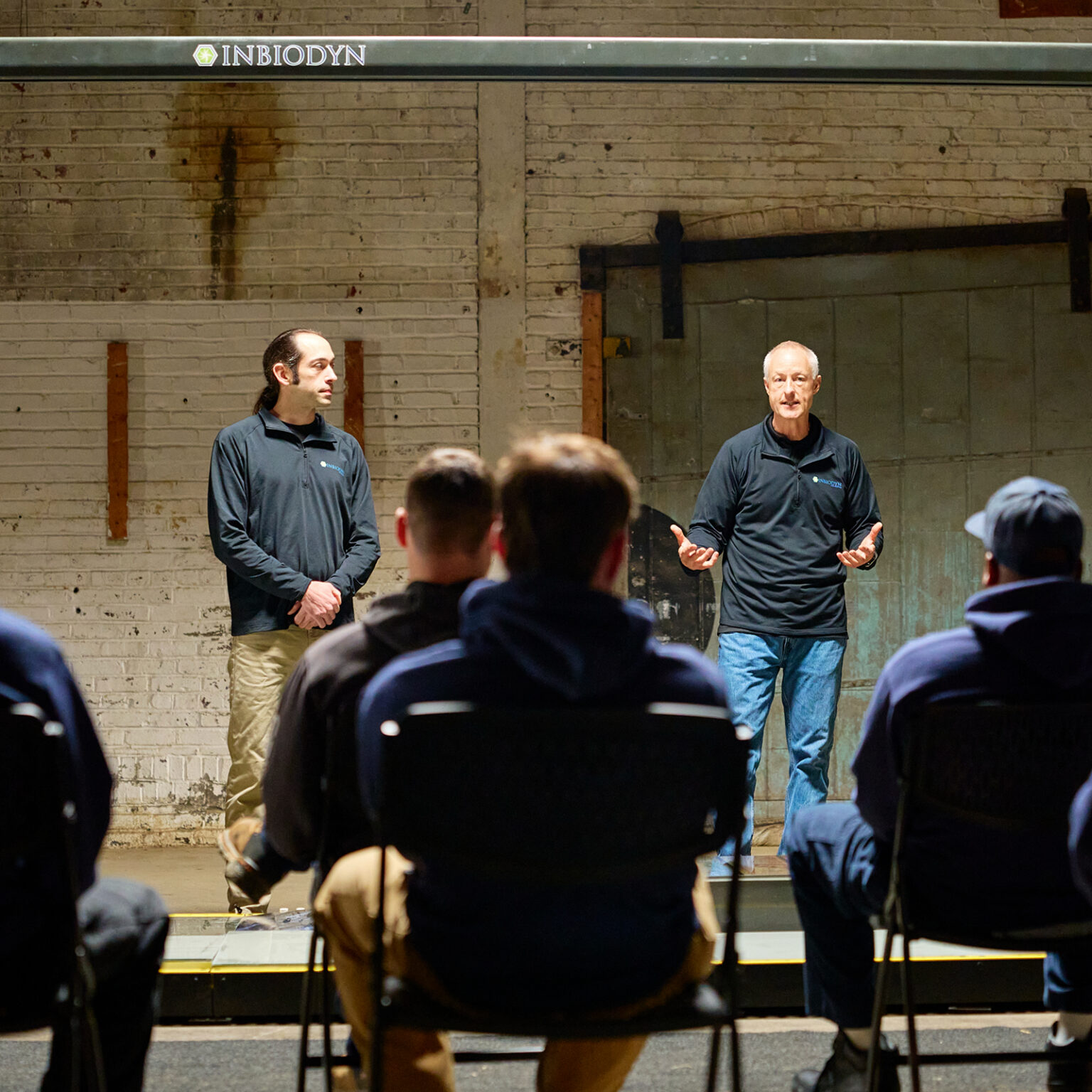
Learn by Doing is rooted in decades of peer-reviewed University research.
Breaking down the method
While every training solution is unique, there are fundamental ideas in the Learn by Doing method that apply in virtually any training scenario.

Action + observation:
Exposing Bad Technique
So often, the way we’re progressing through a movement or task is creating a risk that we’re simply not aware of. Our training typically starts by asking trainees to do the task at hand without any additional guidance to highlight typical form or technique that can put the user at risk. Through a class format (direct observation), motion capture, or other feedback such as using force sensors, this step is designed to show where and how risk develops.
observation:
Learning Good Technique
Once trainees have a better understanding of how a common technique can lead to risk, our trainers demonstrate proper technique and highlight the differences. This literally allows trainees to see and better understand how the proper form differs from what they’ve likely been doing.

action:
Experiencing Good Technique
In this step, trainees are asked to perform the same challenge or task using good form. This may take a few tries and that’s part of the process. Good form can feel foreign or unnatural at first even if it’s a safer approach. But after repeated efforts, trainees begin to adopt the proper form which allows them to complete the task with lower risk. This establishes a “new normal” for the trainee that will automatically be put into practice in the real world. Only by experiencing good form vs bad can we change behavior in a positive and long-lasting way. Practice makes more perfect.
Let's talk Safety
Whether you have a unique safety challenge, or interest in one of our products, we’d love to talk.